
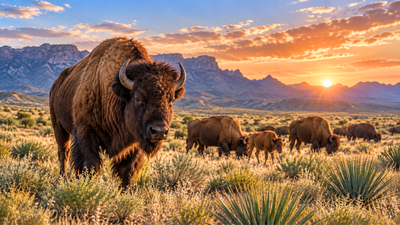
Mexico has brought American bison back to parts of the Chihuahuan Desert after the animals disappeared from much of their historical range in northern Mexico during the 19th century. In 2009, 23 bison from Wind Cave National Park in South Dakota were moved to Rancho El Uno in Chihuahua as part of a binational conservation effort. The goal was not simply to increase bison numbers, but to restore the ecological role of a large grazer that had once shaped North American grasslands. Bison graze, trample vegetation, disperse seeds and create wallows that disturb the soil and produce small patches of different vegetation. Researchers studying the reintroduced herd found measurable differences in vegetation around wallows.
How Mexico brought bison back after more than a century
American bison once ranged across northern Mexico as well as much of the United States and Canada. During the 19th century, hunting and other pressures caused populations to collapse, and bison had been nearly eliminated from Mexico by the second half of the century. Historical records show that they once inhabited states including Chihuahua, Coahuila, Sonora, Nuevo León and Durango.The recovery programme began in 2009 when 23 bison from Wind Cave National Park were transferred to Rancho El Uno in the northern Janos Valley of Chihuahua. Genetic research had found the Wind Cave herd to have high genetic diversity and no evidence of domestic-cattle gene introgression, making the animals suitable for establishing a conservation population in Mexico.Rancho El Uno covers 18,546 hectares within the Janos Biosphere Reserve, one of Mexico’s important remaining grassland landscapes. The area provides habitat for species including black-tailed prairie dogs, golden eagles, burrowing owls and migratory birds, giving the bison reintroduction significance beyond the recovery of a single species.
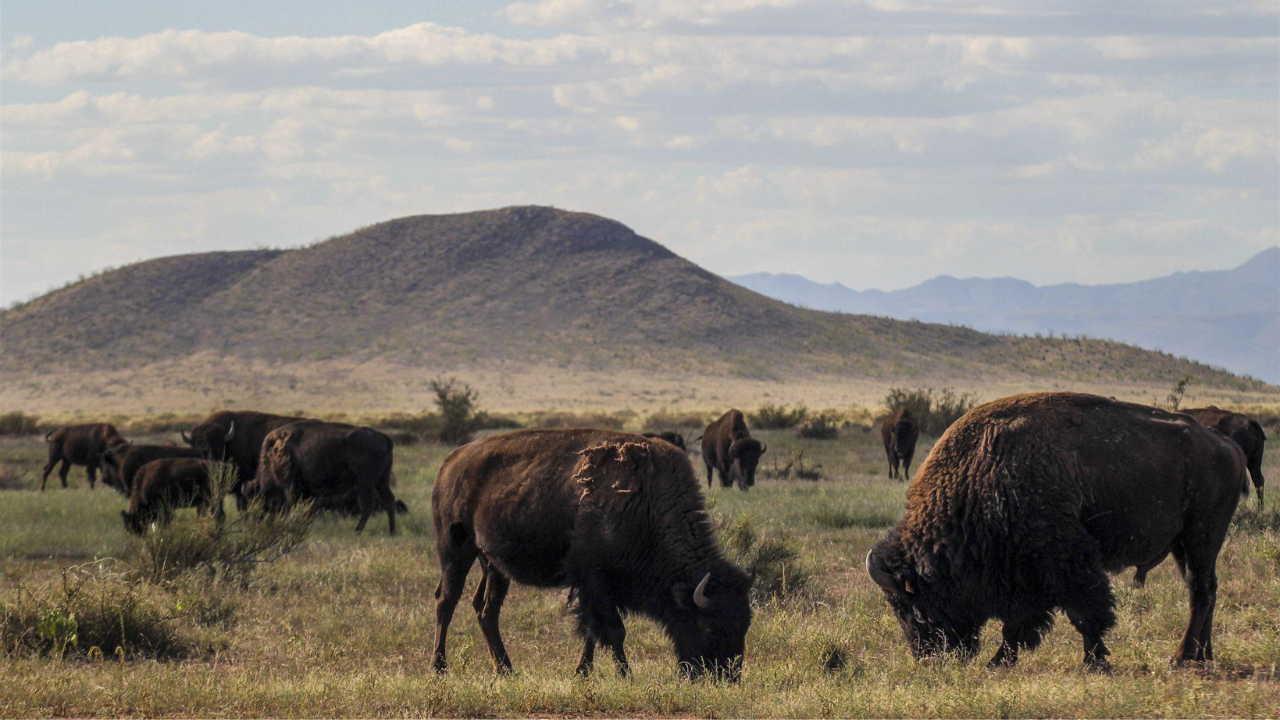
What bison started changing in the desert grassland
Bison influence grasslands through their daily behaviour. Grazing changes vegetation height and density, their hooves disturb the ground, their waste returns nutrients and their movements can transport seeds. Wallowing has a particularly visible effect because repeated rolling creates shallow depressions and exposes patches of soil.Researchers studying the Janos herd compared vegetation and soil inside bison wallows with surrounding areas. They found differences in plant composition and structure, with some species occurring inside wallows and others outside them. The findings showed that bison activity was creating a more varied mosaic of vegetation across the grassland.These small disturbances can provide conditions for plants that may not thrive in undisturbed grass. Over time, such variation can increase habitat diversity and create different resources for insects, birds and other wildlife.
How their return can support biodiversity and native grasslands
The return of bison restores a large-grazer function that had been missing from northern Mexico for more than a century. Their presence introduces regular grazing and physical disturbance into a landscape where those processes had been greatly reduced.This matters in the Janos region, where native grasslands support a diverse community of wildlife. Black-tailed prairie dogs, for example, are an important part of the local ecosystem and provide habitat and food resources for other species. Maintaining the grassland itself also benefits numerous resident and migratory birds.Mexico has expanded the reintroduction beyond Chihuahua. In 2019, 19 bison from Rancho El Uno were transferred to the El Carmen Nature Reserve in Coahuila, establishing the country’s second conservation herd.
Why bison are part of a much bigger restoration effort
The bison programme operates alongside broader conservation work at Rancho El Uno. Land managers use regenerative cattle ranching, planned rotational grazing, habitat restoration and erosion-control measures to improve the condition of the grasslands.The Mexican Fund for the Conservation of Nature describes the wider objective as conserving grasslands and wildlife while restoring soil fertility and natural water, nutrient and energy cycles. Bison contribute to that strategy by providing a form of natural grazing and disturbance alongside the area’s active land management.This makes the project more than a species-reintroduction exercise. It combines the return of a native large mammal with efforts to improve the wider landscape on which numerous species depend.
From 23 bison to a growing conservation population
The founding herd increased rapidly after its arrival. By 2021, the Rancho El Uno population had reached about 230 animals, compared with the original 23. The growing population gave conservationists enough animals to establish additional herds elsewhere.In 2025, 44 bison were moved from the Janos population to a new conservation site in Coahuila, further expanding the species’ presence in Mexico. Establishing separate herds also helps spread conservation gains across different landscapes and reduces reliance on a single population.What began with 23 bison in 2009 has therefore developed into a national recovery effort. The animals are once again moving through parts of their former Mexican range, while their grazing and wallowing are helping reintroduce ecological processes that disappeared when the species was hunted out of the region.


