
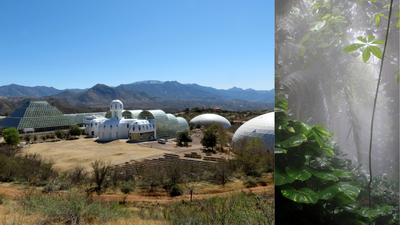
Researchers turned off the water supply to the tropical rainforest inside Arizona’s Biosphere 2 in 2019, and watched the ecosystem respond to an artificial drought. The experiment lasted four months in total, which included the recovery period, while the forest itself went without rain for about 9.5 weeks. Carbon storage eventually fell by roughly 70%, but plants that had access to water several meters below the surface helped the ecosystem withstand the dry period and respond when water returned.The project was known as Water, Atmosphere and Life Dynamics, or B2-WALD, which ran from September 2019 into January 2020. Researchers from several institutions installed hundreds of sensors and used stable-isotope tracers to follow water and carbon through the soil, plants and atmosphere.
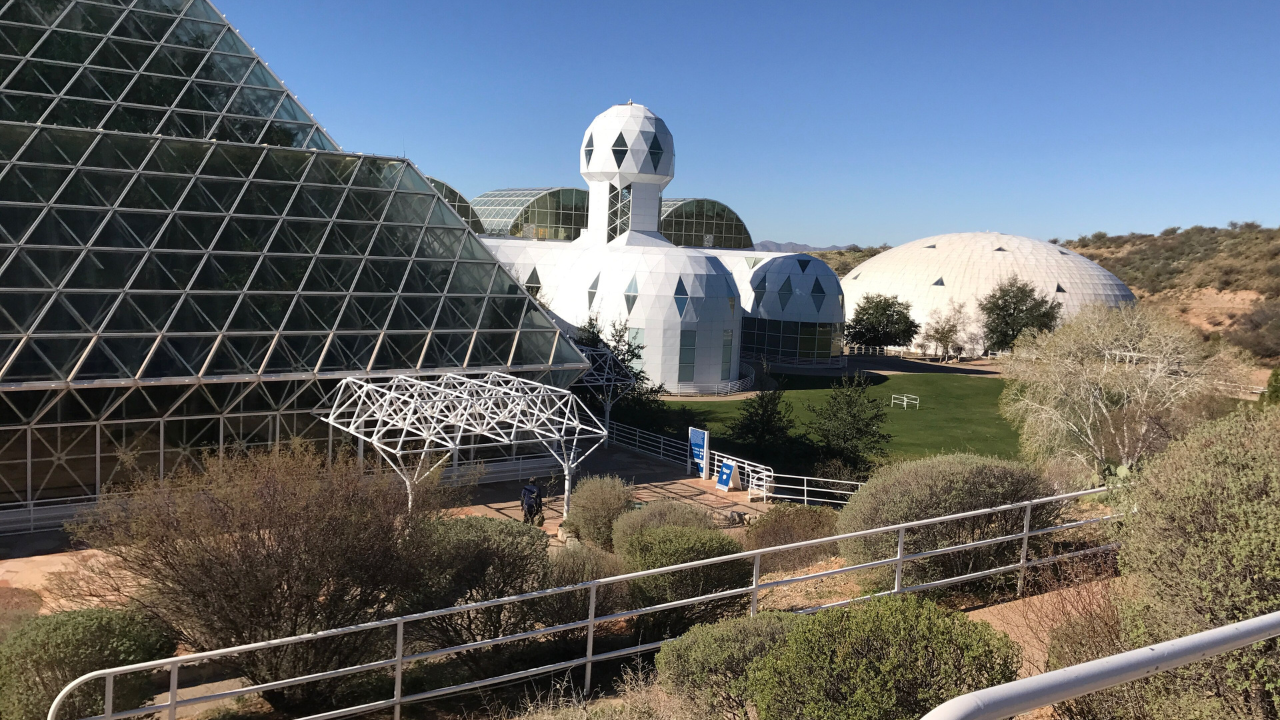
Biosphere 2, with upgraded solar panels in foreground, sits on a sprawling 40-acre (16-hectare) science campus that is open to the public | Wikimedia Commons
Rain stopped inside the glass enclosureThe rainforest inside Biosphere 2 covers roughly three acres beneath a glass enclosure, and contains about 90 plant species. This includes large canopy trees and understory vegetation. Researchers could remove rainfall in a controlled environment without accounting for the many variables because of which drought experiments become difficult in an outdoor forest.The University of Arizona described the project as a four-month experiment that was designed to simulate an ecosystem-scale drought and recovery. Researchers released about 12,000 gallons of water into the rainforest when the dry period ended in December 2019, which marked the first artificial rain after more than two months without it. The drought did not affect every plant in the same way, as some trees reduced water use rapidly as the upper soil dried. Others continued to function longer and retained their leaves, which provided shade over plants growing beneath the canopy.Some trees saved deep water for laterLarge drought-sensitive trees, which normally consumed substantial amounts of water from the topsoil, sharply reduced their water use when that surface layer dried. The researchers had expected those trees to switch quickly to deeper water; instead, they found that deep reserves were generally used only during the most severe part of the drought.The 2021 study in Science used labeled water and carbon to track these movements, and it found that all canopy-forming trees had access to deep water, but those reserves were largely spared until late in the drought. The study also found that different plant groups responded differently depending on their drought tolerance and position within the forest. That arrangement gave the forest several overlapping responses to water stress. Trees that reduced their activity conserved resources, while more drought-tolerant species continued functioning and maintained parts of the canopy. Carbon and water cycling slowed as the drought intensified, but the ecosystem did not respond as a single unit.Carbon storage fell sharplyThe rainforest’s carbon storage declined by about 70% as drought stress increased. That figure does not mean the forest lost 70% of its trees or that 70% of its stored carbon disappeared permanently; it simply describes the reduction in the ecosystem’s carbon storage during the drought experiment. The stressed forest emitted more volatile organic compounds, including isoprene, hexanal and monoterpenes. Some of these compounds interact with atmospheric chemistry, while soil microbes intercepted part of the material released by plants.The University of Arizona’s account of the research said the forest’s carbon and water cycling responded to the drought through a combination of plant strategies and interactions with soil microbes. The team used nearly two miles of Teflon tubing and more than 133 sensors throughout the rainforest, collecting measurements from the atmosphere, vegetation and soil.
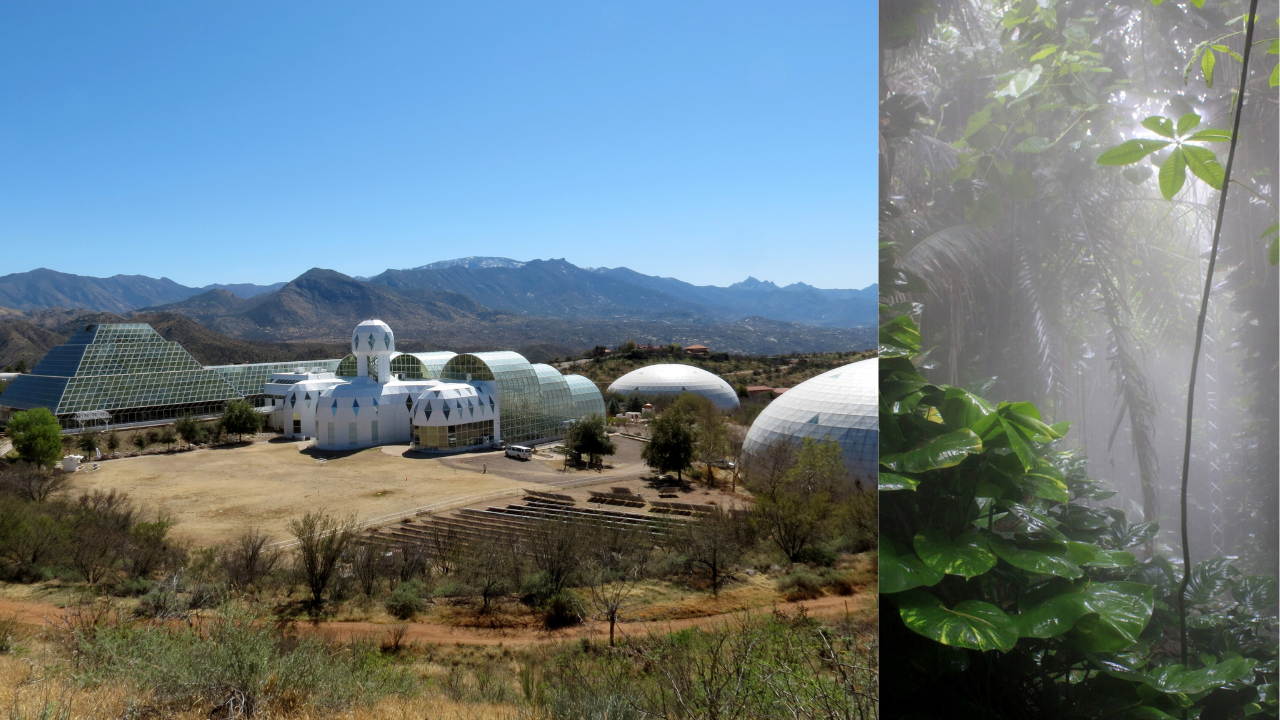
Exterior showing parts of the rainforest biome and of the habitat, with the West lung in the background | Wikimedia Commons
Recovery began when water returnedThe recovery phase gave the researchers another set of measurements that could not be obtained by looking only at the dry period. Plants did not all return to their previous behavior at the same rate. The research found that the diversity of drought responses helped the ecosystem resume carbon and water cycling after moisture became available again.Later work based on the B2-WALD experiment found that canopy trees could access water as deep as about 3.3 meters, with deep water contributing between 21% and 90% of transpiration for the trees studied during drought. The researchers also found that trees reduced their overall water flow as conditions became dry, which meant that access to deep water did not simply allow them to maintain normal water use.The B2-WALD findings came from an enclosed experimental rainforest rather than a natural tropical forest, where the researchers used the controlled system to separate drought responses that are difficult to distinguish in a forest that is exposed simultaneously to changing rainfall, temperature, soil conditions and atmospheric conditions. The experiment’s four-month period ended with the rainforest being rewetted, after the prolonged dry phase had sharply reduced its carbon storage and forced its plants to draw on different water-use strategies.


