
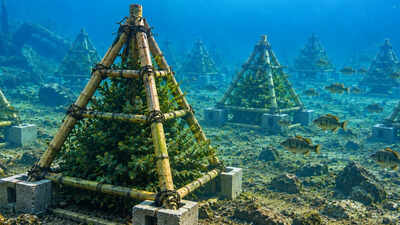
Every year, thousands of natural Christmas trees are discarded after the holiday season. At Georgia’s Allatoona Lake, some of those trees have been given a second chance at life instead of being discarded. By 2022, the unusual recycling effort had transformed into a long-running partnership between lake managers, fisheries officials, volunteers and local communities.According to the U.S. Army Corps of Engineers, rangers and volunteers at Allatoona Lake, alongside the Georgia Department of Natural Resources Wildlife Division, Marietta Bassmasters, Keep Bartow Beautiful and Boy Scouts, had been installing recycled Christmas trees in the waterbody since 2006. The major objective behind this initiative was to provide habitat for fish while also supporting recreational fishing.The project was not about throwing old trees into the water at random. Instead, the installation was timed around the lake’s seasonal water levels, and the Corps explained that the work was carried out in January, when Allatoona’s water level sits roughly 17 feet below normal summer pool. After trees were collected, workers drilled holes in their bases, placed them on concrete bases and attached them with wire. During the summer, when the water levels rose again, the trees became submerged structures.How bamboo pyramids took trees deeper beneath the waterAnother method opened a way for the programme to place the Christmas trees in deeper sections of the lake. Allatoona volunteer Jimmy Moore built fish attractors from bamboo, constructing pyramid-shaped frames into which the recycled trees could be placed. The pyramids were anchored to bases, while concrete cinder blocks were positioned on their sides to help the structure sink and remain on the lake bed.By 2022, Moore’s custom bamboo attractors had become an established feature of the lake’s conservation work. A USACE profile published in July 2021 highlighted the then-81-year-old volunteer, noting he had moved to Allatoona Lake from Tennessee in 2016. Throughout his six years at the reservoir, Moore built these specialised fish structures out of excess bamboo found around the park. He explained that the frames provide dense, safe pockets where small baitfish can hide from larger predators while growing. Moore also noted that for the last six years, since he started adding these pyramids in the lake, there had been no problems, and he believed to have helped the fish population and habitat. However, those observations are Moore’s own assessment of the project instead of a separate scientific measurement of population growth.
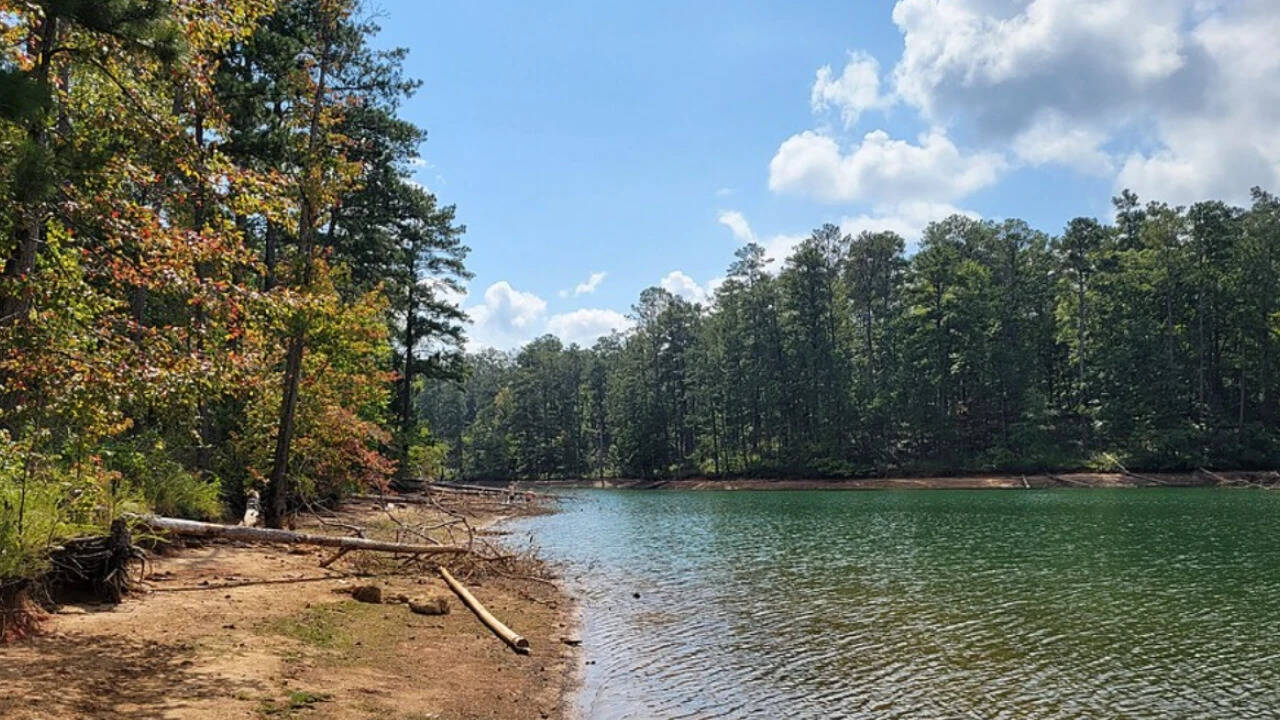
Shoreline in the Allatoona Wildlife Management Area. Credits: Wikimedia Commons
Meanwhile, this deep-water approach fundamentally transformed the lake’s conservation layout. While conventional shoreline tree bundles were restricted to shallower shelves, the weighted pyramids safely expanded the fish habitat into vast, open-water zones that previously lacked organic cover.The Christmas tree recycling effort became a fish habitat management programKeep Bartow Beautiful reported that their local Christmas tree recycling program began in 2000, while the fish-habitat component was expanded in 2006 after the organisation was offered the opportunity to partner with the Lake Allatoona Corps of Engineers, Georgia DNR and other groups. Keep Bartow Beautiful shared that the original tree-recycling program involved collecting Christmas trees for uses such as mulching. On the other hand, the later initiative used whole trees that were anchored in Lake Allatoona, thus allowing a portion of the annual post-holiday collection to become a fisheries management resource.Residents of the community were encouraged to bring live, undecorated Christmas trees to designated collection areas after the holiday season. By early 2022, the program had reached a notable scale. Georgia DNR’s 4 February 2022 fishing report said that approximately 225 recycled trees had been added around the Victoria Day Use Fishing Jetty. The report described the effort as being in its 16th year and shared that more than 3,500 recycled trees had been added to the lake, benefiting sportfish and anglers.What underwater fish attractors meant for fishingThe habitat management was aimed at creating places where fish could find shelter and occupy areas of the reservoir that otherwise fell short on sufficient cover. Federal records indicate that each year different areas of the lake were selected for tree placement, allowing habitat to be replenished across different locations instead of concentrating the new structures in one place.The approach, however, remained consistent with established fisheries-management practices in Allatoona. A 2008 Georgia DNR fishing report noted that anglers could now target fish around submerged trees, brush and other fish attractors.The project therefore brought several strands of the Allatoona project together at once. The residents of the community supplied the discarded Christmas trees; volunteers collected and prepared them for installation, while the organisations placed them underwater, and specially designed bamboo pyramids allowed some of the materials to reach deeper into the water.


