
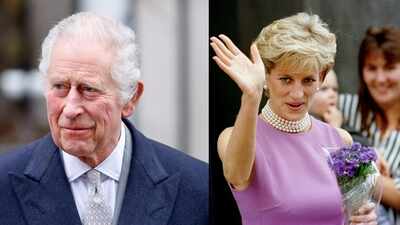
A disputed conversation from the days after Princess Diana’s death has prompted an unusual intervention from Buckingham Palace, nearly three decades after it is alleged to have taken place.Charles Spencer, Diana’s younger brother, claims in his forthcoming memoir, Swan Song: Diana, My Sister, that the then Prince Charles told him: “Rest assured, we’ll forget her soon enough.” Spencer places the alleged remark amid tensions within the family over arrangements for Diana’s funeral in September 1997.The Palace has not issued a point-by-point rebuttal of Spencer’s account. Instead, its response challenges the reliability of memories formed during an intensely traumatic period.“While we do not comment on books as a matter of principle,” a Palace spokesperson said, the King was mindful that “the pain of fraternal grief can cloud reason, affect judgment and colour memory” in ways others may not recognise, even many years after a loss.The statement leaves the substance of Spencer’s allegation formally unaddressed while casting doubt on his recollection of the exchange.
Funeral dispute returns to focus
At the centre of Spencer’s account is a disagreement over whether William and Harry should join the procession behind their mother’s coffin. The princes were 15 and 12 when Diana died.Spencer says he believed his sister would have opposed putting her sons in the procession and objected when he learnt that they were expected to take part. He recounts that the disagreement eventually brought him into direct conflict with Charles. According to Spencer, their conversation became heated and Charles delivered what he describes as a “stream of anger”. Spencer says he ended the exchange after reacting with disbelief to what he had heard, the Daily Mail reported.William and Harry ultimately walked in the procession alongside their father, Prince Philip and Spencer at Diana’s funeral on September 6, 1997.Penguin Random House has confirmed that the memoir passages being quoted publicly are authentic, CNN reported. The publisher’s confirmation establishes that the extracts accurately represent Spencer’s written account; it does not establish independently that the conversation happened exactly as he recalls it.Spencer goes further in the memoir by offering an interpretation of the alleged remark. He writes that he understood it as evidence of “pent-up contempt” for Diana and of frustration at the extraordinary public reaction to her death.The Palace’s statement does not engage with that interpretation. Its response is confined to the effect bereavement can have on judgment and memory.Diana died aged 36 on August 31, 1997, after a car crash in Paris. The days that followed saw an enormous public outpouring of grief and intense scrutiny of how the royal family responded to her death.
Harry has given differing reflections on the procession
Harry has revisited the decision to make the young princes walk behind Diana’s coffin on several occasions, and his comments over the years have reflected its complexity.Speaking to Newsweek in June 2017, he said no child “should be asked to do that under any circumstances”. In the BBC documentary Diana, 7 Days, broadcast later that year, he said he remained uncertain whether the decision had been right or wrong, while also saying he was glad he had participated.Those remarks came 20 years after the funeral and underline how differently the episode has been remembered and interpreted even by those who took part in it.
Spencer says anniversary revived pressure to tell his version
Swan Song: Diana, My Sister is scheduled for publication on September 22. Penguin Random House describes it as the first occasion on which Spencer has discussed his sister at length in book form.“The aim of this book is to tell the truth about Diana from her brother’s perspective,” Spencer said when the memoir was announced.Spencer has said the approaching 30th anniversary of Diana’s death brought another wave of requests for interviews and recollections about her life. Rather than continue responding piecemeal, he decided to set down his own account of events and memories surrounding his sister.He has also argued that some claims about Diana have hardened into accepted versions of events despite, in his view, being untrue, saying there are “untruths that have become accepted over time”.Extracts from the memoir are being published by the Daily Mail before the book’s September 22 release.


