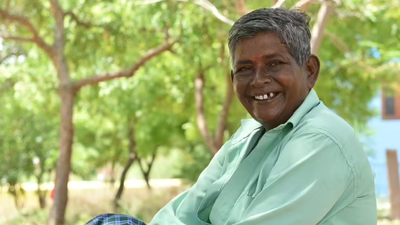
For nearly four decades, people in a small village in Tamil Nadu saw ‘Muthu Master’ as a quiet, hardworking man who wore a white shirt and dhoti, smoked beedis, worked in the fields, and lived alone in a tiny house near a temple. Muthu was always called ‘Annachi’, a respectful term used for an elder brother. But only a handful knew that Muthu Master was born as Petchiammal, a woman who had chosen to live as a man after a tragedy changed her life.Today, Muthu looks back and says, “This attire has given me dignity and helped me raise my daughter,”
6 May 2026 | 16:56
What are the three things that make you instantly happy?
It was one evening that changed everything
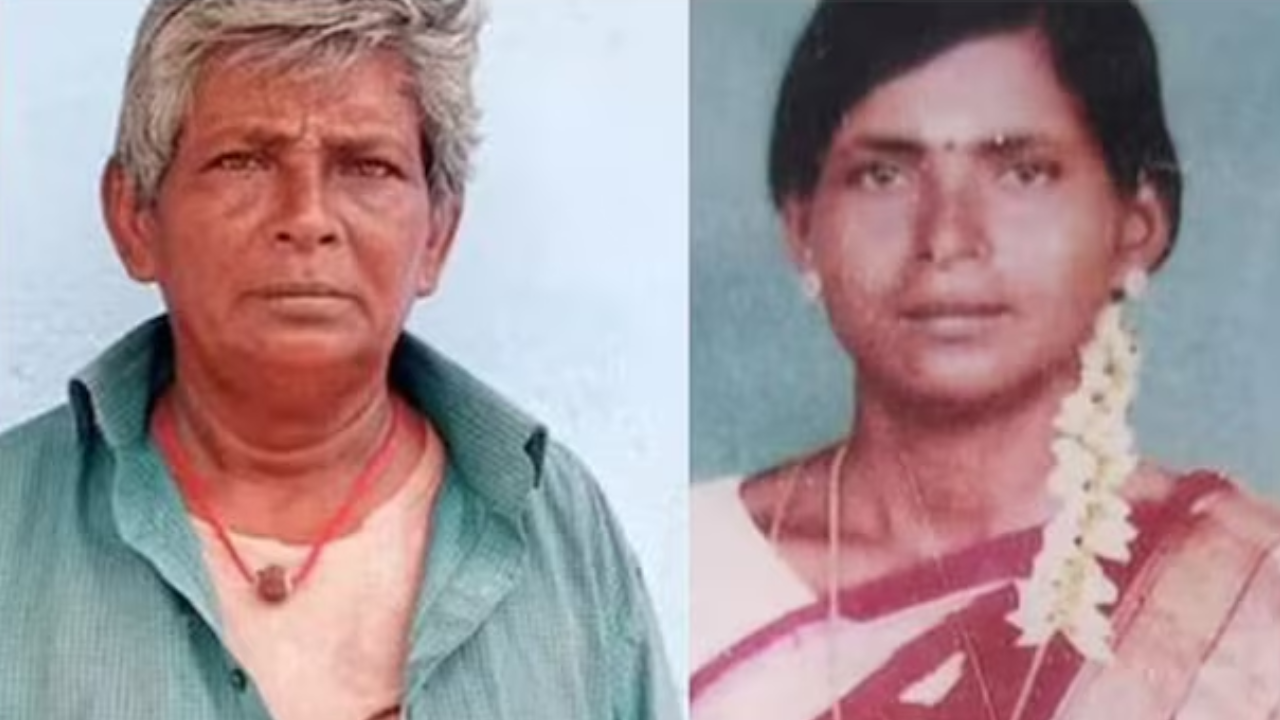
Muthu Master alias Petchiammal
As per a TOI report, Petchiammal was married to her late husband Shiva when she was just 20 at the time. But just 15 days after the wedding, her husband died of a heart attack. Soon afterward, she discovered that she was pregnant. Alone, widowed, and carrying a child, she gave birth to a daughter and began working in a charcoal factory in Thoothukudi for survival.Life was difficult, but it was one evening on the way to work that changed everything. “I was walking to the factory when a truck driver stopped and tried to force me into the vehicle,” Muthu recalls. “I refused. He abused me and drove away, but I was terrified.” That night, while working the night shift, she could not stop thinking about the incident.The next morning, she bought a shirt and a dhoti. She travelled to Tiruchendur, shaved her head, visited the temple one last time as a woman, and stepped out wearing men’s clothes. “That was the end of Petchiammal,” she says. “I became Muthu.” she told TOI.The surname “Master” came later, when Muthu began working in an eatery in Thoothukudi. The name stayed and so did the identity. Muthu still visits the Tiruchendur temple regularly, but never enters the sanctum. “Men have to remove their shirts. I cannot do that, obviously,” Muthu says with a smile.
Even the daughter didn’t know her mother’s identity
After working as a cook for several years, Muthu moved to Chennai. Three years later, Muthu returned to Thoothukudi district with a 10-year-old daughter and settled in Kattunaickkanpatti, a village where nobody knew her truth. Even the daughter came to know of her mother’s identity only when she was seven.In the village, Muthu became a farm worker. Skilled with a spade and axe, Muthu earned respect quickly. People called him for work. Nobody questioned him.In a conversation with TOI, she says with a laugh, “Perhaps I am old enough now for people to accept me as I am.” But living as a man came with its own challenges. There were public toilets to share, crowded spaces to navigate, and constant caution to maintain. Yet Muthu says the discomfort was worth the safety of her daughter.
The big role of ‘Beedi’ in maintaining the disguise
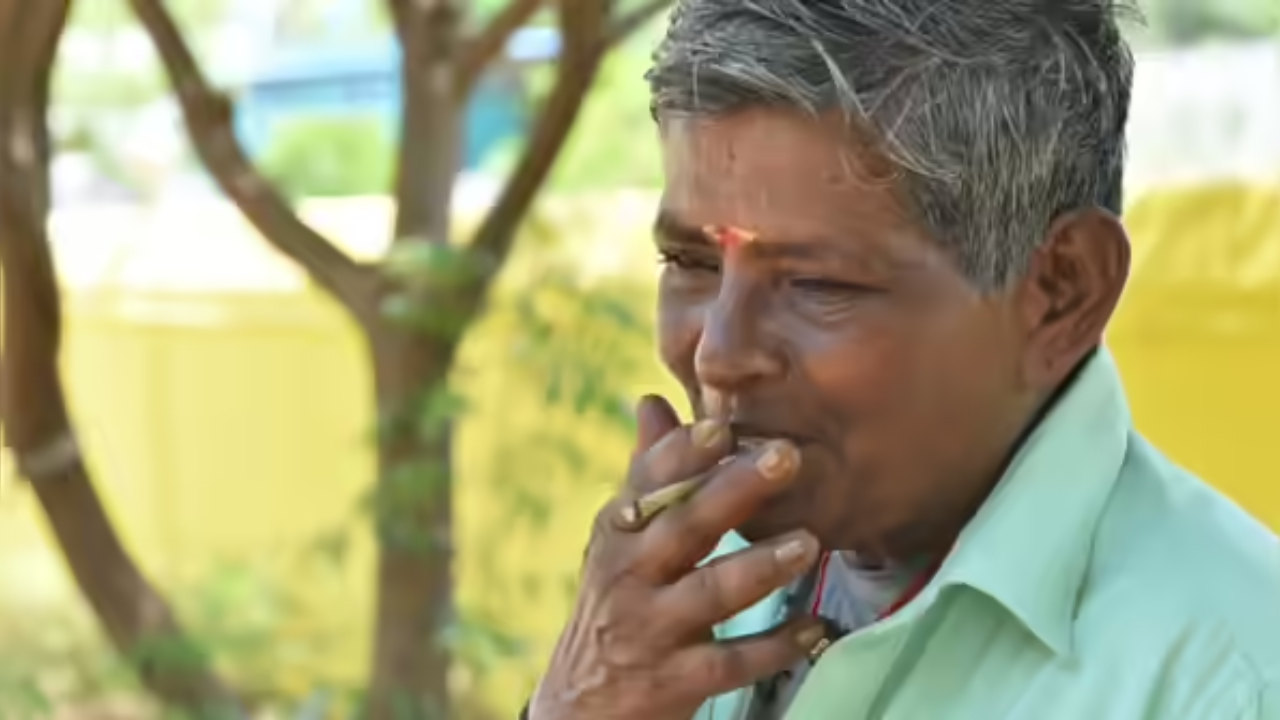
File photo
“Men’s clothing gave me protection,” Muthu explains. “And I added one more thing to it.” That “one more thing” was a beedi. Learning to smoke became part of the disguise. “The beedi has been a good cover for me,” Muthu told TOI. “Once, I returned home late at night. A drunk man approached me. I immediately lit a beedi. He asked me for a match and called me ‘brother’.”Then comes the question that has followed Muthu for years: Didn’t she miss being a woman? “I wanted to remain a widow and raise my daughter alone,” Muthu says. “But what safety can society guarantee me? Where is the safety for women?” she said.She paused before continuing. “If somebody harmed me, would society give me justice without blaming me first?” For Muthu, becoming a man was never about identity. It was about survival. It was about raising a daughter.
Hiding her menstrual cycle was a big challenge
Life demanded sacrifices of Muthu that nobody saw. Every month brought another challenge. “It was difficult,” Muthu said about hiding her menstrual cycle. “I had to be extra careful. I took pills to manage the pain and worked harder so that nobody would suspect.” Menopause arrived early, at 40. Looking back, Muthu said a line that perhaps explains her entire life. “When you make a choice, shouldn’t you do everything it demands?”
What the daughter said about her mother
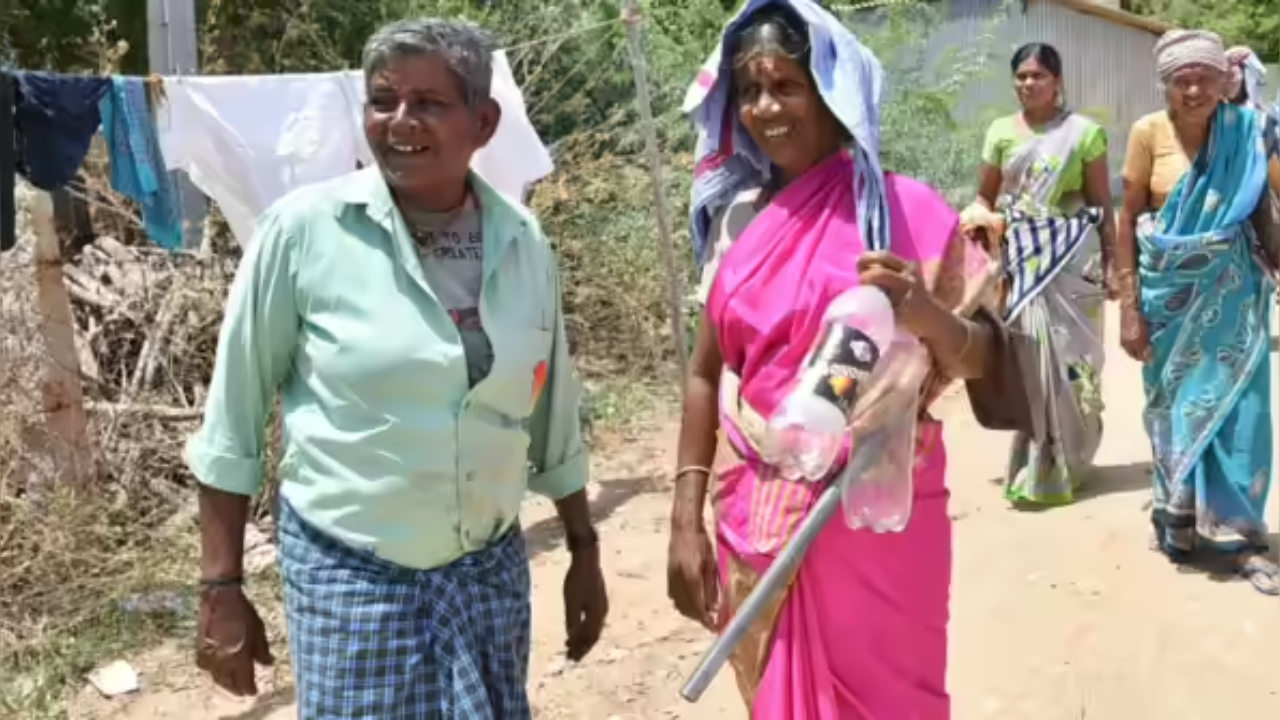
‘Muthu Master’ continues to live in her home village of Kattunaickkanpatti in Tamil Nadu (File photo)
Today, Muthu’s daughter, Shanmugasundari, runs a provision store in a nearby village. Their lives have become quieter. “Life was a battle all along,” Shanmugasundari told TOI. “My mother is very tough. She never asks anything from me. Independence and self-respect are her greatest qualities.”Life was not easy for her daughter Shanmugasundari either. She grew up without knowing her mother and was plunged into her mother’s dual identity without any choice. In an interview with The New Indian Express, she said, “I grew up in my aunt Laxmi’s house and I thought she was my mother. It was only after her death that I started to live with my own Amma. I was 10 years old.” She continues, “She worked every day for me and in front of everybody, I called her Muthu Master.” Both mother and daughter had to hide Petchiammal’s real identity. Only close relatives and her daughter knew the truth. The village knew only Muthu. Even after her daughter married and life became stable, Petchiammal did not return to her original identity. The identity that began as protection had become home. For 37 years, she lived as a man not because she wanted to hide who she was, but because the world made her believe it was the safest way to survive. ‘Muthu Master’ continues to live in her home village of Kattunaickkanpatti in the Thoothukudi district of Tamil Nadu. In an interview with The New Indian Express, she said, “Now, I want to continue living as Muthu till I die because this look gave me courage and protection when I was vulnerable.”In the end, Muthu Master’s story is not only about gender or disguise. It is about a woman who rebuilt herself after loss, fear and loneliness, a woman who gave up one identity to protect another and a mother who chose safety over convention.


