
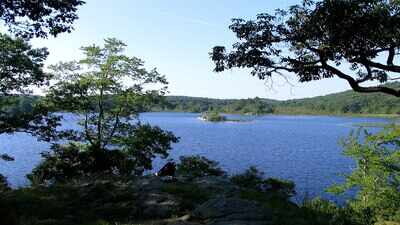
In 1910, when New York planned to build a prison in the Hudson Highlands, one widow proposed an alternative plan. Rather than allowing the forests to become a prison complex, Mary Williamson Averell Harriman offered the state a bargain that would permanently reshape one of the region’s most scenic areas.According to the Quarterly Journal of the New York State Historical Association, New York State had identified thousands of acres near Bear Mountain as the site for a vast prison complex. Mary Williamson Averell Harriman responded by offering 10,000 acres of land and a $1 million endowment on the condition that the prison proposal was abandoned and the land preserved as a public park instead. The state accepted the offer, helping pave the way for the creation of Harriman State Park, which today spans nearly 48,000 acres and is among New York’s largest state parks.How the donation changed New York’s plansThe Quarterly Journal also notes that railroad magnate Edward Henry Harriman had acquired extensive forested land in Orange and Rockland counties as part of his Arden estate and strongly opposed New York’s proposal to build a state prison at Bear Mountain. Believing the Hudson Highlands would better serve the public as protected open space, he sought to preserve the landscape rather than see it developed as a correctional facility. Harriman died in September 1909 before his vision could be realised. After his death, his wife, Mary Williamson Averell Harriman, carried it forward by offering the state land and financial support to establish a public park instead.The report states that in 1910, she wrote to Governor Charles Evans Hughes with an unprecedented proposal. She offered the state approximately 10,000 acres from the Harriman estate together with a $1 million gift to support park development. The offer came with clear conditions. The state had to abandon plans for the prison, expand the authority of the Palisades Interstate Park Commission to include the new lands and commit to preserving the landscape for public recreation rather than private development.The proposal quickly won support from conservationists, civic leaders and philanthropists. According to the Quarterly Journal, financier George W. Perkins led a fundraising campaign that attracted major donations from prominent industrialists, including John D. Rockefeller and J. P. Morgan, while New York State committed matching funds to help bring the project to fruition. On 29 October 1909, the Harriman family formally donated the land along with financial support, creating what was then one of the largest private gifts ever made for conservation in the United States.From prison plans to one of New York’s largest parksInstead of becoming a prison complex, the forested highlands were incorporated into an expanding network of protected public land. According to the New York State Office of Parks, Recreation and Historic Preservation, Harriman State Park officially opened in 1910, while neighbouring Bear Mountain State Park followed soon afterwards, creating an extensive protected landscape within easy reach of New York City. Today, Harriman State Park covers nearly 48,000 acres and contains more than 200 miles of hiking trails, over 30 lakes and reservoirs, campgrounds, beaches and extensive forests. Together with Bear Mountain State Park and adjoining protected lands, it forms one of the largest continuous conservation areas in the lower Hudson Valley.Large protected areas help wildlife move through forests, wetlands and streams without the habitat fragmentation caused by roads and urban sprawl. Such areas have helped protect watersheds for clean water, reduce soil erosion and provide natural flood protection as well.
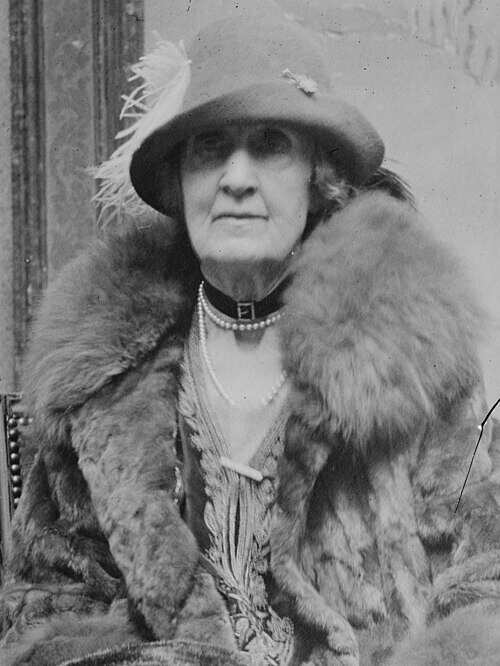
Mary Williamson Averell Harriman, whose 1910 offer of 10,000 acres and a $1 million endowment persuaded New York State to abandon plans for a prison and establish what became Harriman State Park. Image Credits: Wikimedia Commons.
A conservation legacy that continues to growMary Harriman’s donation reflected the growing conservation movement in the United States during the Progressive Era. Instead of viewing forests primarily as sources of timber or land for development, reformers increasingly argued that natural landscapes provided long-term public benefits that justified permanent protection. Her gift is an example of how private philanthropy can influence public policy. Rather than donating land without conditions, she used the offer to steer the state’s decision away from a prison and toward conservation. The result significantly altered the future of the region.The story also illustrates how conservation decisions can shape landscapes for generations. By securing the land as part of a larger park system, the Harriman family helped preserve a continuous stretch of forests, lakes and wetlands rather than protecting isolated parcels. That continuity became important for maintaining the character of the wider landscape and ensured that the area could serve both ecological and recreational purposes long after the original land deal had been completed.More than 100 years later, millions of people visit Harriman State Park each year to hike, paddle and camp in forests that might otherwise have been replaced by prison buildings and associated infrastructure. Many of its roads, trails and visitor facilities still reflect the early conservation vision developed by the Palisades Interstate Park Commission during the park’s first decades.


