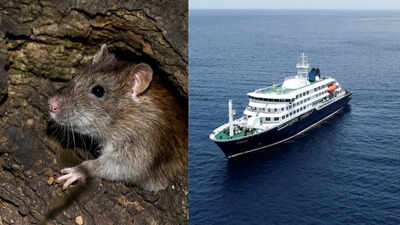
A rare and unsettling health situation has unfolded on a cruise ship travelling across the South Atlantic, pulling multiple countries into a coordinated alert. What began as a few cases of fever and respiratory illness among passengers has now escalated into confirmed hantavirus infections, suspected cases, and several deaths. The vessel, carrying fewer than 150 people, reportedly moved through remote regions including Antarctica and isolated Atlantic islands before concerns were formally raised. As investigations continue, health authorities across several nations are now tracking exposure routes, passenger movements, and possible points of infection.Experts say the overall global risk remains low, but the spread of alerts across countries shows how quickly such events can cross borders in modern travel.
WHO alerts countries linked to hantavirus outbreak
As reported by WHO, at least 12 countries have now been officially or indirectly connected to the outbreak response. Some are directly involved due to passenger boarding or medical evacuation, while others have been notified because their nationals were on board or passed through stopover points.
- Canada
- Denmark
- Germany
- The Netherlands
- New Zealand
- Saint Kitts and Nevis
- Singapore
- Sweden
- Switzerland
- Türkiye
- The United Kingdom
- The United States of America
Each of these countries is now part of ongoing monitoring, contact tracing, or medical coordination efforts linked to the cruise ship cases. In some places, passengers were evaluated after disembarkation. In others, authorities are simply tracking citizens who were on board during the voyage.
What happened during the cruise before the outbreak escalated
The cruise ship left Ushuaia in early April 2026 and followed a long route through remote and ecologically sensitive regions. Passengers reportedly visited or passed near Antarctica, South Georgia, and several isolated Atlantic islands. The first signs of illness appeared during the voyage. Some passengers developed fever, fatigue, and gastrointestinal symptoms. At first, it looked like a typical onboard infection. But the situation changed when a few cases rapidly progressed to severe respiratory distress. Medical teams onboard reportedly began isolating symptomatic travellers as concern quietly spread among passengers and crew members during the expedition voyage.The speed of deterioration in some patients has raised concern among medical teams. Experts say this pattern appears consistent with severe hantavirus pulmonary syndrome, a known but rare condition that can rapidly become life-threatening in vulnerable patients.
What hantavirus is and how it spreads in humans
Hantavirus is a type of virus present in various regions around the globe and affects people upon contact with an infected rodent or inhalation of dust containing its excrement, urine, and saliva. It is not a virus that transmits efficiently between humans in most instances. This is one of the principal factors preventing health authorities from considering it a significant worldwide risk. Human transmission does not seem to play any major role in disease development.The symptoms that it brings about are dangerous. It is usually characterised by flu-like symptoms that may include fever, muscle ache, and lethargy. However, in some patients, it rapidly develops into respiratory complications, pulmonary fluid accumulation, and shock. Antiviral medication has not been developed yet to treat this viral infection. Treatment is mostly symptomatic and involves admission to the hospital for supplemental oxygen and intensive care unit management.
What makes the 12-country alert more significant
What makes this situation notable is not just the virus, but the setting. Cruise ships are closed environments with international passengers, which makes tracing exposure and movement more complex.Health authorities are now trying to determine where the initial infection occurred. The World Health Organization has reportedly assessed the overall global risk as low. Still, the involvement of 12 countries means surveillance is active and ongoing. Passengers who were on board are being monitored for symptoms for several weeks due to the virus’s incubation period, which can extend up to six weeks.What travellers should knowIt is important for travellers to understand that hantavirus infection is still very uncommon, although international media attention has recently been drawn to the case of an outbreak on a cruise ship, which has resulted in new travel health guidelines for visitors to areas of wilderness in certain parts of Argentina and Chile. According to health experts, hantavirus infection typically results from contact with infected rodents or exposure to aerosolised rodent urine, feces, or saliva, particularly in confined spaces, such as cabins, tents, storage rooms, and rural guest houses. Travellers who spend time outdoors, hike, camp, and embark on expeditions may be at a greater risk compared to urban tourists. Despite the low-risk scenario for tourists, authorities have advised travellers arriving from the affected regions to monitor their health for several weeks following their return.


