US lobbying disclosures filed under the Foreign Agents Registration Act (FARA) show that Pakistan engaged extensively with political, defence and national security stakeholders in Washington between May 6 and May 9, 2025, a period that coincided with India’s Operation Sindoor.According to documents reviewed by ANI, Pakistan recorded nearly 60 interactions involving US lawmakers, congressional staff, Treasury officials, national security advisers, defence-linked personnel and journalists.
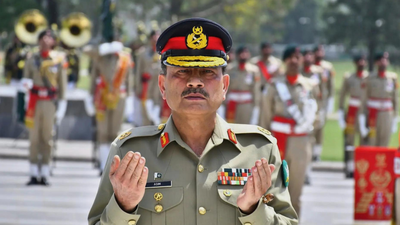
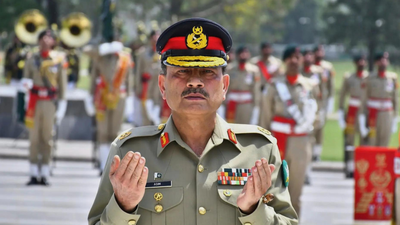
This comes as Pakistan army chief Asim Munir on Sunday claimed that New Delhi approached the United States for mediation and a ceasefire following last year’s conflict after Operation Sindoor.While addressing a ceremony at General Headquarters in Rawalpindi to mark the first anniversary of ‘Marka-e-Haq’, the name given by Islamabad to the four-day conflict with India, Munir claimed that Pakistan’s strategy was “superior” to India’s during the conflict.“India expressed the desire for mediation through the American leadership, which Pakistan accepted in the interest of wider regional peace,” Munir said.Asim Munir made the remarks nearly a year after India launched Operation Sindoor. During the intervening period, Munir repeatedly made statements directed at India before raising the latest claim regarding a ceasefire and US mediation.Documents filed under FARA indicate that Pakistan was engaging political stakeholders in Washington after India launched Operation Sindoor in response to the Pahalgam terror attack and carried out strikes on terror infrastructure in Pakistan and Pakistan-occupied Jammu and Kashmir.Following the launch of the operation, India said it was a tri-services mission aimed at dismantling terror infrastructure across Pakistan and PoJK. In a statement issued on the intervening night of May 6 and May 7, 2025, the ministry of defence said the armed forces had conducted precision strikes on nine terror-linked locations.The ministry also stated that no Pakistani military facilities were targeted and described the operation as “focused, measured and non-escalatory in nature”.The records indicate that many of the interactions were requests to arrange meetings for Pakistan’s ambassador, with several entries described as “meeting request with the ambassador”. By May 7 and May 8, the filings increasingly referenced discussions related to “tensions in the region”.Among the contacts listed were communications involving US military veteran Brian Mast, national security advisers linked to House minority leader Hakeem Jeffries, and staff from the office of Senate Majority Leader John Thune. The filings also recorded outreach to advisers connected to House Majority Leader Steve Scalise.The activity intensified on May 9, with several entries marked as “defence attache meeting request”. According to the Pakistan Embassy in Washington, the country’s defence attache is Brigadier Irfan Ali.The filings also highlight differing approaches by India and Pakistan in Washington during the escalation period following the Pahalgam terror attack.According to the documents reviewed by ANI, India’s engagement in the US after the Pahalgam attack focused on seeking international condemnation of terrorism and diplomatic support against what it described as the “barbaric” attack, in which 26 civilians, 25 Indians and one Nepali citizen, were killed.The filings further indicate coordination with a journalist from a major American newspaper regarding an interview during the same period.The disclosures align with earlier reporting by CNN that discussions on a ceasefire between India and Pakistan had been underway for several days. However, the cessation of hostilities was eventually agreed upon after communication through a hotline between the Directors General of Military Operations (DGMOs) of the two countries.The filings reviewed by ANI do not show comparable Indian diplomatic or defence-related outreach in Washington after the launch of Operation Sindoor and before the cessation of hostilities.In contrast, Pakistan’s disclosures indicate sustained engagement with US political leaders, congressional offices, and defence and national security officials during the period of the Indian strikes.India had stated before announcing the cessation of hostilities that it was Pakistan’s Director General of Military Operations (DGMO) who initiated contact with his Indian counterpart, then DGMO Rajiv Ghai.New Delhi subsequently announced the halt in hostilities while maintaining that no third party was involved in the process.The Government of India has also maintained that Operation Sindoor remains ongoing, stating that only the “88-hour” kinetic phase of the operation had concluded.Following the end of that phase, Prime Minister Narendra Modi said that any terror attack on India would be treated as an “act of war” and that India would respond “on our own terms, in our own way”.Later, during a special discussion on Operation Sindoor in the Lok Sabha, PM Modi said this approach would become the “new normal”.
Poll
Should the US play a mediating role in Indo-Pak discussions about conflict?
Operation Sindoor was launched on May 7, 2025, following the Pahalgam terror attack that killed 26 civilians. The operation was a calibrated tri-services response aimed at targeting terror infrastructure across the Line of Control and inside Pakistan.The operation was based on multi-agency intelligence inputs that identified nine major camps targeted during the strikes. The mission involved detailed planning and an intelligence-led approach designed to minimise collateral damage, with operational restraint exercised to avoid civilian casualties.Following Operation Sindoor, Pakistan launched retaliatory drone and unmanned combat aerial vehicle (UCAV) attacks targeting Indian airbases and logistics infrastructure. These attempts were intercepted and neutralised by the country’s layered air defence systems.


