
NEW DELHI: The humble e-way bill, introduced to check truck movement nine years ago, has helped govt track diversion of fertiliser. Thanks to the electronic tool, which is to be used by every truck carrying goods valued at over Rs 50,000, just a preliminary check at the height of the fertiliser crisis post Iran war showed that trucks meant to deliver goods at designated locations were making detours or were making one trip too many.“The ministry did some preliminary checks when, after the war started, there were concerns that there may be some fertiliser shortage and there were also fears of hoarding and diversion,” an official said.The finance ministry, which undertook the analysis, then alerted the fertiliser department. Diversion of fertiliser, which is highly subsidised, is not a new phenomenon but govt is more than keen to crack down on it in the wake of the renewed pressure on prices, although supply has eased and govt has stocked up. The fertiliser ministry also maintains Integrated Fertiliser Management System (iFMS) to track the movement of subsidised fertiliser.
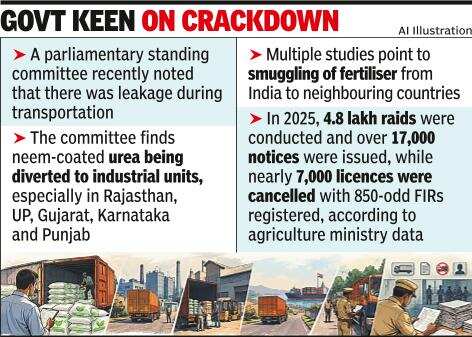
A parliamentary standing committee recently noted that there was leakage during transportation. “Partial unloading and re-routing during transit from rake points to remote districts (particularly in hilly terrain – J&K, Uttarakhand); movement without valid documents (Madhya Pradesh: 28 cases of unauthorised movement in 2025-26); delayed or non-reporting of receipt at destination (were observed),” it said in a report tabled in Aug.The parliamentary panel recently said that neem-coated urea was seeing diversion to industrial units such as plywood and resin factories, diesel exhaust fluid (DEF) units and for cattle feed manufacturing, especially in Rajasthan, Uttar Pradesh, Gujarat, Karnataka, and Punjab.According to agriculture ministry data, in 2025, 4.8 lakh raids were conducted across the country and over 17,000 notices were issued, while nearly 7,000 licences were cancelled with 850-odd FIRs registered against defaulters.In fact, there have been multiple studies by agencies which also point to smuggling of fertiliser from India to neighbouring countries through trucks.


