
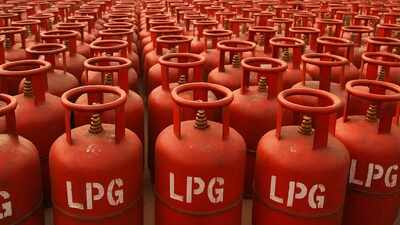
The US-Iran war has hit LPG imports and as a result India’s domestic LPG customer base has declined for the first time in more than a decade. Around 6.2 million households have dropped off between April and August. The contraction came as the Iran war disrupted supplies, prompting oil companies to stop issuing new connections and tighten checks on existing customers.The decline has taken place against the backdrop of the Iran war and its impact on LPG availability from the Gulf region. Before the war, the region accounted for around 90% of India’s LPG imports.
LPG connections drop
Oil ministry data showed that active domestic LPG customers stood at 327.7 million at the beginning of September, down from 333.9 million at the start of April. The number of beneficiaries under the government’s Ujjwala scheme for poor households also declined, falling by around 0.6 million to 105.7 million, according to an ET report.The fall marks a reversal after years of steady expansion in LPG adoption. At the start of 2015-16, India had 148.6 million active LPG customers. That number had more than doubled to 333.9 million by the beginning of the current fiscal year.LPG customer growth was particularly strong in the four years through 2018-19, when it ranged between 11.9% and 19.6%. As the customer base became larger, however, the pace moderated to around 5% or lower. In the current fiscal year, instead of growing, the customer base has contracted by 1%.With supplies becoming tighter, oil marketing companies stopped issuing new connections to households and began using Aadhaar-based biometric verification to identify inactive customers, multiple LPG connections within the same family and households that already had access to piped natural gas (PNG), industry executives said.
PNG push
At the same time, the government has been encouraging households in areas where PNG infrastructure is available to move from LPG to natural gas.City gas distribution companies added nearly 0.6 million PNG customers during the current fiscal year through July, taking the overall number to 17.5 million. Billed customers provide a different measure of the shift, with their number rising by 1.06 million to 10.7 million.The move to PNG accounts for roughly one-sixth of the 6.2 million decline in LPG customers.The largest regional fall came in southern India, where the LPG customer base declined by 2.63 million from the end of March. Western India followed with a reduction of 1.62 million, while northern India saw its customer base fall by 1.5 million.Eastern India recorded a decline of 0.34 million customers.Despite the contraction, northern India remained the region with the largest LPG customer base at the beginning of September, with 99.3 million customers. Southern India had 79.8 million, western India 68.3 million and eastern India 67.5 million.India’s LPG use has risen sharply over the past few years. Consumption stood at 31.3 million tonnes in FY25, up from 29.7 million tonnes a year earlier. Domestic output, however, has not kept pace and has remained broadly unchanged at around 12.8 million tonnes.Initial estimates for FY26 point to LPG consumption of about 28 million tonnes, while domestic production is expected to be around 10.7 million tonnes. The numbers again leave a substantial shortfall that has to be met through imports.The widening gap between what India consumes and what it produces domestically has increased the country’s dependence on imports to meet LPG requirements, making the fuel one of the more import-reliant components of its energy basket.The supply disruption has also brought another limitation into focus: India’s relatively small LPG storage capacity.Storing LPG is more complicated and costly than storing crude oil because the fuel has to be maintained in liquid form under pressure. This means storage requires specialised facilities, including pressurised cylinders, spherical tanks and underground caverns.India is estimated to have a total LPG storage capacity of around 1.9 million tonnes, which is equivalent to roughly 22 days of supply.The expansion of storage infrastructure has been constrained by the high cost of building such facilities, geological limitations and the geographically dispersed nature of LPG distribution. With demand rising rapidly, storage capacity has not expanded at the same pace.


