
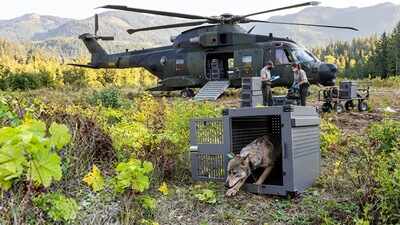
For decades, Isle Royale National Park, a rugged island in Lake Superior, has served as a natural laboratory. Isolated from the mainland, its ecosystem revolves largely around two species: wolves and moose. When the island’s wolf population collapsed because of decades of inbreeding, scientists feared wolves would disappear entirely, allowing moose numbers to grow unchecked and fundamentally altering the island’s forests.According to Michigan Technological University, the National Park Service relocated 19 wolves from Minnesota, Michigan and Ontario to Isle Royale during 2018 and 2019 after the island’s population had dwindled to just two closely related wolves. By the winter of 2026, researchers estimated the wolf population had recovered to 37 animals, while the moose population had declined by 75 per cent, from roughly 2,000 in 2019 to 524.Why wolves had to be brought backWolves first reached Isle Royale naturally by crossing temporary ice bridges from the mainland during the late 1940s. For many decades, occasional ice bridges allowed new wolves to arrive, maintaining enough genetic diversity for the population to survive. As winters became warmer, however, ice bridges formed less frequently. The isolated wolf population gradually became increasingly inbred. By 2018, only two wolves remained, and both were closely related. The remaining pair showed signs of severe inbreeding, including spinal deformities that reduced their ability to reproduce successfully.The absence of wolves led to a rapid increase in the island’s moose population. As a result of heavy browsing, there was no regeneration of young balsam fir and other tree species in many locations, changing the structure of the forest and impacting many other plant and animal species dependent on it. To prevent extinction and restore ecological balance, the National Park Service began a multiyear program to airlift wolves from the mainland to the island.Restoring balance, not simply increasing wolvesThe goal of the reintroduction was not simply to increase wolf numbers but to restore the ecological processes that had shaped Isle Royale for decades. According to the National Wolfwatcher Coalition, as wolf populations recovered, predation on moose also increased. During the most recent year, researchers estimated that wolves killed about 24 per cent of the island’s moose population, one of the highest predation rates ever recorded there.Researchers caution, however, that these changes are part of Isle Royale’s natural predator-prey dynamics rather than evidence of ecological imbalance. Before wolves were reintroduced, moose populations had reached unusually high levels, placing intense pressure on the island’s vegetation. As prey numbers decline, wolf populations are also expected to adjust, continuing the natural cycles that have shaped Isle Royale’s ecosystem since the 1950s.
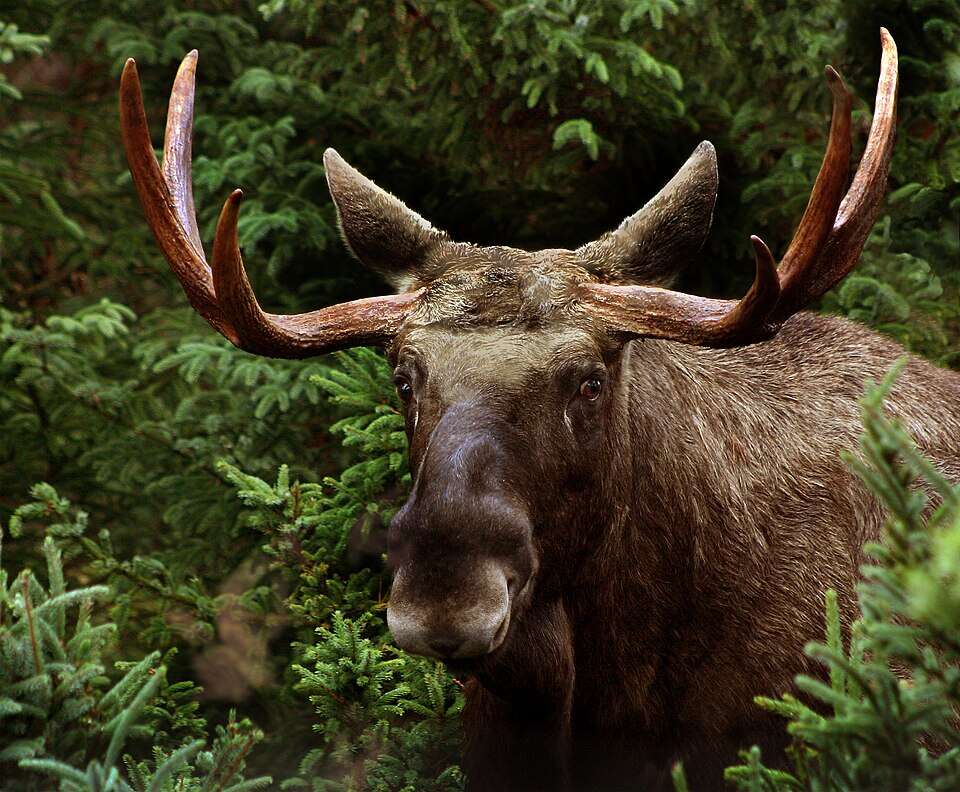
A moose stands in a North American forest. As one of the large herbivores influenced by wolf populations, moose play an important role in shaping forest ecosystems. Image Credits Wikimedia Commons.
A living laboratory for ecologyThe Isle Royale wolf-moose study has been running continuously since 1958, making it the longest ongoing research project of its kind on a predator-prey relationship. Free from hunting, roads and permanent human settlements, the remote island provides scientists with a rare opportunity to study natural ecological processes with very little direct human interference.According to the Proceedings of the National Academy of Sciences (PNAS), large predators play a critical role in regulating ecosystems through trophic cascades, influencing not only prey populations but also vegetation, nutrient cycling and the diversity of other species. Restoring top predators can therefore trigger ecological changes that extend well beyond the predators themselves.Today, Isle Royale’s ecosystem continues to evolve. Wolves once again occupy the island in several breeding packs, while moose populations are responding to renewed predation, offering a living example of how top predators can shape entire ecosystems.


